
Chapter 3
Deploy Structural Backup Solutions: Maintain your physical autonomy by utilizing practical baby gear. A lightweight, ergonomic baby carrier allows you to keep a fussy infant secure and close to your chest while keeping both of your hands free to navigate a meal without relying on an assistant.
Acknowledge and Respect Relative Limits: Accept that even the closest family members have their own comfort levels and boundaries. A relative's refusal to provide childcare in a specific moment is not a rejection of your worth as a daughter; it is simply an expression of their immediate personal capacity.
Address Friction Away from High-Stress Environments: If an outing ends in hurt feelings, avoid trying to litigate the argument at a crowded table. Wait until you are back in a calm, neutral environment before having an honest, open conversation about how to better support each other moving forward.
Conclusion: Trading Silent Assumptions for Direct Dialogue
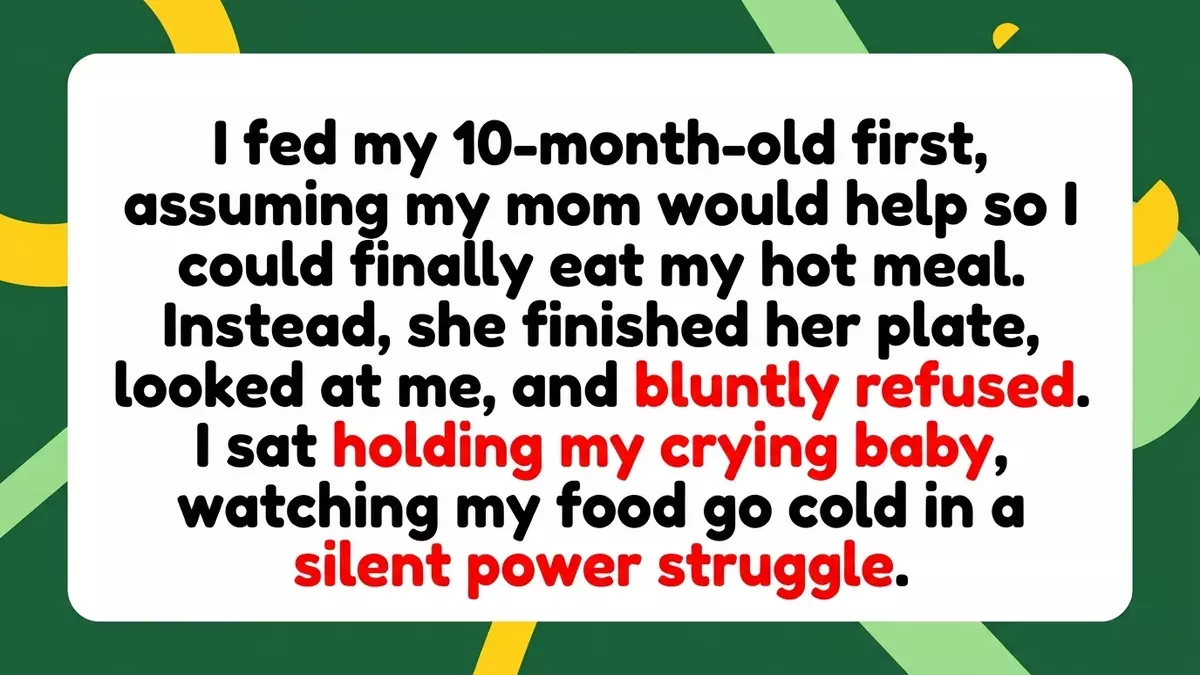
Ultimately, this sudden maternal clash serves as a powerful reminder that true family peace cannot thrive in an environment dominated by unvoiced expectations. While a new mother's need for a brief respite to consume a warm meal is entirely valid, a grandparent's right to say no must also be respected, even when the timing feels incredibly inconvenient. Moving forward, the key to preserving vital family bonds lies in ditching historical patterns that no longer suit everyone involved and replacing them with clear, direct dialogue. By trading silent contracts for upfront honesty, families can transform high-pressure outings back into enjoyable, supportive experiences.
Frequently Asked Questions
Q1: Was the grandmother wrong for refusing to hold her fussy granddaughter?
From an etiquette standpoint, her timing was incredibly inconvenient and lacked empathy for her exhausted daughter. However, from a boundary perspective, she is not legally or morally obligated to provide childcare on demand. The lack of clear, prior communication made the refusal feel far more hostile than necessary.
Q2: Did the daughter overreact by refusing her mother’s eventual offer to help?
Yes. Choosing to reject a belated offer of assistance simply to nurse a grievance or punish a relative is a passive-aggressive behavior pattern. It escalates a simple logistical misunderstanding into a long-term emotional power struggle, leaving both sides feeling resentful.
Q3: What exactly is a "silent contract" in family dynamics?
A silent contract is a psychological term for a set of unspoken rules and expectations we expect others to follow without ever explicitly discussing or agreeing to them. When people inevitably violate these unwritten rules, it leads to intense disappointment and conflict because neither person was operating from the same expectations.