
Chapter 3
Request an Emergency Transfer: Prioritize physical and emotional safety by formally requesting an emergency room reassignment to remove yourself from the toxic environment.
Public Backing: The Community's Definitive Take
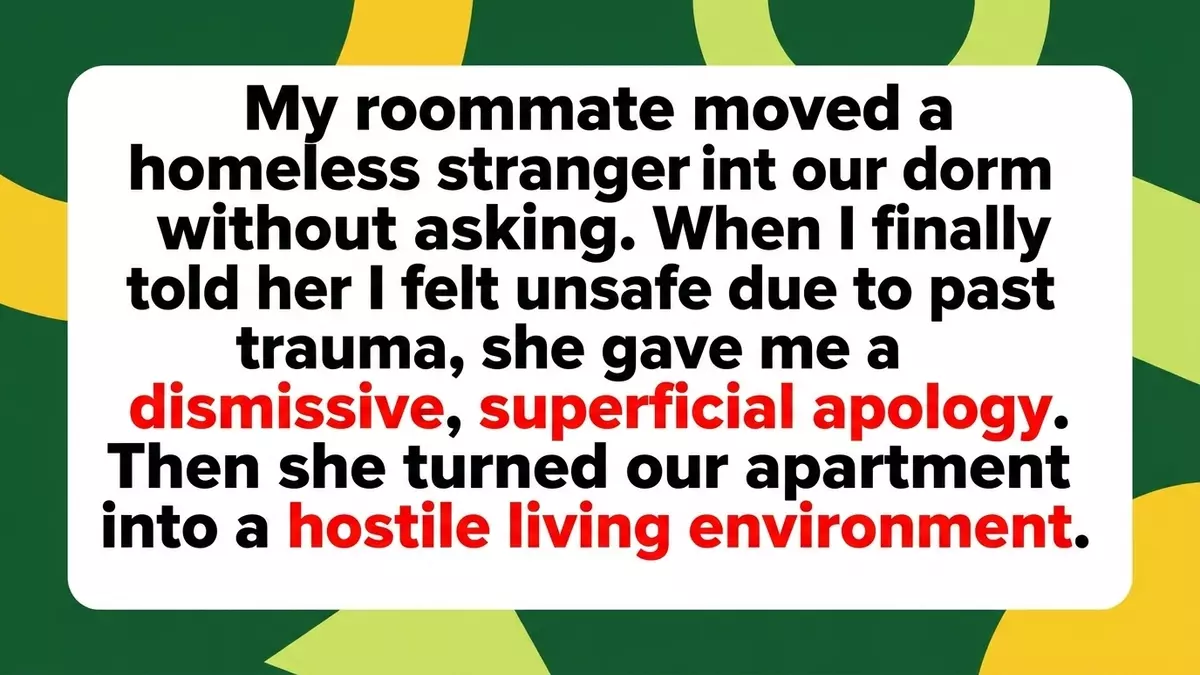
When this troubling narrative surfaced online, the internet community came in hot. Commenters on platforms like Reddit were nearly unanimous in their fierce support for the younger student.
The digital consensus was clear: physical safety and mental well-being must always take precedence over a toxic friendship. Many users pointed out the glaring power dynamic given the age gap, noting that the 35-year-old roommate's behavior was a blatant display of manipulation. The community heavily criticized the older student for exploiting her roommate's home to feed her own ego, leaving the younger student to bear the emotional costs of an unpredictable and unsafe living situation.
Conclusion: Balancing Charity with Personal Boundaries
This unsettling campus incident highlights a delicate societal balance: the desire to help those in need versus the absolute necessity of feeling secure within your own home. True charity is vital, but it should never be practiced at the expense of another person's safety, consent, and mental peace. When boundaries are ignored under the guise of doing good, it isn't altruism anymore—it is simply control.
Frequently Asked Questions (FAQs)
1. Is it legal to bring a homeless person into a university dorm?
No. Virtually all university housing contracts strictly prohibit hosting unauthorized guests, let alone allowing non-students to reside in campus units. Doing so violates student housing policies and can lead to immediate eviction, fines, or suspension for the students on the lease.
2. What should I do if my roommate brings an unvetted stranger into our apartment?
Your first priority should be your physical safety. Express your discomfort clearly to your roommate. If they refuse to respect your boundaries, document the situation and report the unauthorized guest to your landlord, property manager, or university housing office immediately.
3. How can you tell the difference between genuine charity and performative altruism?
Genuine charity focuses on the well-being of the person receiving help and respects the safety and rights of others involved. Performative altruism is often rigid, highly visible, and dismissed of the negative impacts it causes to immediate peers, acting primarily to boost the perpetrator's ego or reputation.
4. Can I break my college housing lease if I feel unsafe due to a roommate's behavior?
Yes, most universities have protocols for emergency housing adjustments. If you can provide documentation or evidence that your roommate is violating campus policies, creating a hostile environment, or compromising your safety, the housing office will typically facilitate an emergency room transfer.