
Chapter 2
To do this, families often assign rigid roles to the children:
-
The Golden Child: The sibling who complies with the dominant or abusive figures, shields them from criticism, and is rewarded with praise and financial windfalls.
-
The Scapegoat: The sibling who speaks the truth, protects the victimized parent, and is ultimately cast aside as a stubborn troublemaker or a rebel.
The True Function of the Payout
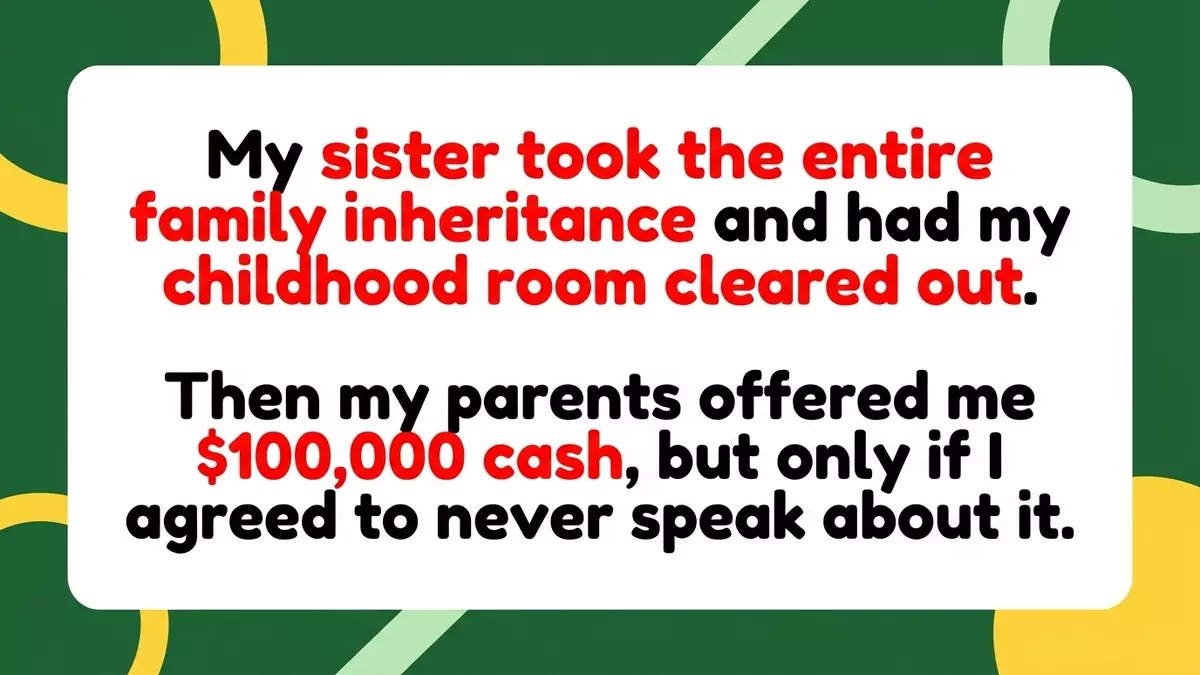
According to family behavioral experts, the parents' sudden $100,000 peace offering was not an act of genuine, retroactive generosity. Instead, it functioned as emotional hush money.
The payout was designed to buy the daughter's silence, ease the parents' immense guilt over enabling the grandparents, and force a false sense of family harmony. Accepting financial gifts tied to such intense manipulation ensures that a child remains bound to a toxic system's terms indefinitely.
The Complicit Victim: The Mother's Enabling Role
One of the most painful elements of this fallout is the mother’s shifting stance. Although the daughter sacrificed her own peace of mind to protect her mother during the initial divorce drama, the mother eventually began pressuring her to accept the $100,000 and reconcile with the family.
This behavior highlights a tragic reality in generational trauma: victims of abuse often become enablers of the very system that harmed them. By urging her daughter to take the money and stop causing a rift, the mother became complicit in maintaining the unhealthy dynamic. Distancing oneself from a parent who refuses to stand up for themselves or protect their children is a agonizing but often mandatory step in breaking the cycle of emotional abuse.
Community Split: Moral High Ground vs. Financial Strategy
When the 28-year-old shared her grueling dilemma with online communities, it sparked a sharp division among readers regarding how to handle generational wealth and toxic boundaries.
| Perspective | Core Argument | Practical Consideration |
| The Total Detachment Camp | Complete non-contact is the only way to heal from systemic emotional abuse. | Taking the cash validates their behavior and gives them long-term leverage over her life. |
| The Strategic Exploitation Camp | Take the $100,000 as a practical tax for the emotional labor she endured. | The money could be quietly put into a high-yield savings account to secure her own or her mother's future. |
| The Middle Ground | Accept the funds, nod politely, and then immediately initiate low-contact terms anyway. | Outmaneuvers the family's manipulation by taking the resource without giving up her personal boundaries. |
How to Establish Boundaries with Toxic Family Systems
Navigating deep-seated family dysfunction is never straightforward, especially when life-altering sums of money are introduced to minimize bad behavior. Striking a definitive balance between self-protection and family obligation is an incredibly difficult tightrope to walk.