
Chapter 3
3. Consider a Strategic Wedding Pause
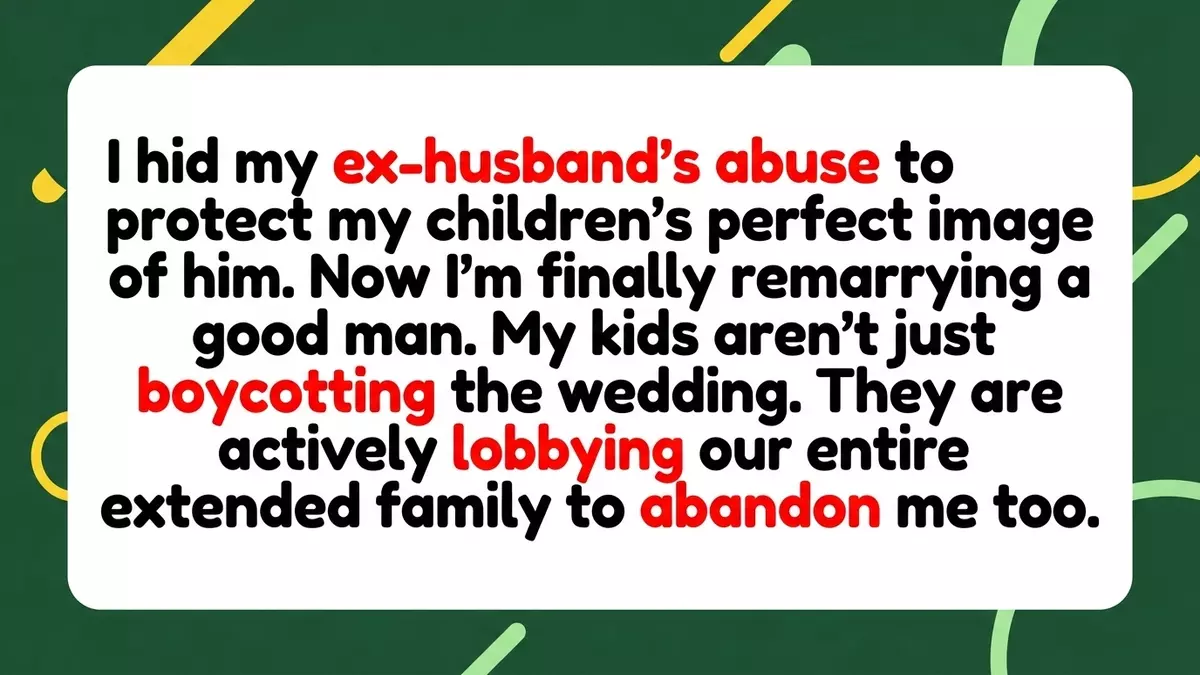
While she absolutely deserves happiness, rushing a wedding during an active family war can cause permanent estrangement. Pausing or scaling back the wedding celebration to focus on family workshops and healing demonstrates to the children that their emotional well-being takes priority over an event, making them far more receptive to the new partner in the long run.
Conclusion: Honesty is the Ultimate Protection
Finding love after surviving an abusive marriage is a beautiful, hard-won milestone. But as this mother’s story powerfully demonstrates, a family cannot be successfully rebuilt on a foundation of hidden pain. Shielding children from the truth often results in them defending the very individual who harmed the family structure. True parental protection doesn't mean fabricating a flawless fantasy; it means guiding your children through the messy, honest realities of life with transparency, patience, and love. Only when the truth is finally brought to light can the entire family begin to step out of the shadow of the past.
Frequently Asked Questions
1. Why do children often side with an abusive parent after a divorce?
Children frequently side with the abusive or less-involved parent due to a psychological defense mechanism. If one parent has been consistently protective, the children feel safe directing their anger at them without fear of abandonment. Conversely, they may coddle the toxic parent because they subconsciously recognize that parent's emotional instability or fragility.
2. How much should you tell your children about a toxic ex-spouse?
Provide a structural framework rather than explicit details. Avoid sharing intimate relationship secrets, legal details, or insults. Instead, focus on clear boundary realities: "Your father and I were unable to treat each other with respect and kindness, and a marriage cannot survive without those elements. We are much healthier living apart."
3. What is "parental alienation by omission" in family counseling?
This occurs when a protective parent remains completely silent about the true, toxic reasons behind a family split. Because the children observe no overt conflict, they perceive the initiating parent's departure as an abrupt, malicious abandonment of the family, causing them to alienate the protective parent.
4. Should a mother postpone her wedding if her children threaten to boycott?
If the children are actively lobbying the extended family and experiencing an identity crisis, a temporary postponement is highly recommended. Forcing a wedding during a high-stakes standoff often cements the children's view of the mother as selfish and can create an unbridgeable emotional divide that lasts into their adulthood.